Why the Best Notebook for Journaling by LeStallion Changes How You Write
I have tried more notebooks than I care to count. Moleskine, Leuchtturm, Field Notes, even a few cheap spiral-bound pads from the grocery store. Each one promised a better writing experience. Each one let me down in some small but cumulative way. The paper bled through. The binding cracked. The pages felt too slick or too rough. And the covers started to look worn after a few weeks in my bag. So when I finally picked up the Best notebook for journaling by LeStallion, I did not expect much. Another notebook, another letdown. But I was wrong.
This article is not a product review in the traditional sense. It is a reflection on what makes a notebook genuinely useful for journaling, and why the Best notebook for journaling by LeStallion deserves a closer look if you are someone who writes to think, plan, or process your day. I have been using it for four months now, and my habits have shifted in ways I did not anticipate.
What Journaling Actually Needs
Journaling is not one activity. It is a category of activities that share a few basic requirements. You need a surface that accepts ink without feathering. You need pages that stay flat when you write near the gutter. You need a cover that protects the contents without adding bulk. And you need a format that invites use rather than demanding it.
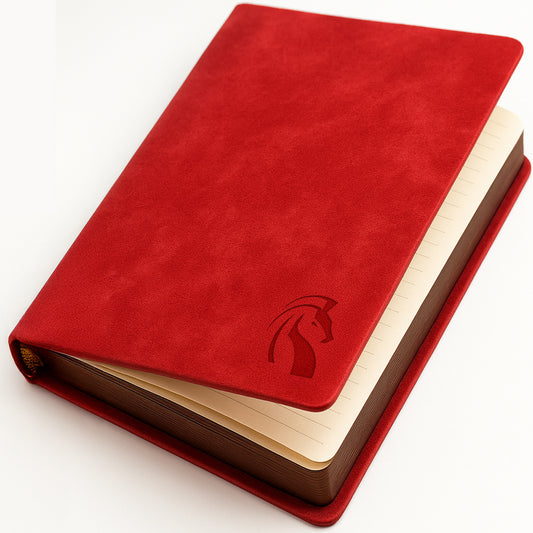
The last point is the one most notebook makers miss. A journal that sits on a shelf looks beautiful. A journal that sits open on a desk, with your handwriting filling its pages, is what matters. The Best notebook for journaling by LeStallion understands this distinction. The cover is stiff enough to write on without a hard surface underneath, but flexible enough to fold back comfortably. The paper has a slight tooth that catches the nib of a fountain pen without dragging. It is a tactile experience that makes you want to keep writing.
Paper Quality and Ink Behavior
I write with fountain pens almost exclusively. That means I need paper that can handle a wet nib without bleeding through to the other side. Most notebooks fail this test. The paper in the LeStallion journal is 100 gsm, which is heavier than what you find in most standard brands. But weight alone does not tell the whole story. The finish matters too. Some heavy papers are coated so smooth that ink sits on top and takes forever to dry. Others are too absorbent and spread the ink into a fuzzy line.

LeStallion strikes a balance. The paper has a subtle texture that holds the ink where you lay it down. Drying time is reasonable, about five to ten seconds with a medium nib, depending on the ink. There is no show-through on the reverse side, and I have yet to see any bleed-through even with a broad nib and a wet ink like Noodler's Heart of Darkness. If you use gel pens or rollerballs, the experience is just as clean. No skipping, no blobs, no smudging.
Binding and Layout
The notebook lies flat when opened. This sounds like a small thing, but it is not. Many sewn bindings create a curve at the spine that forces you to fight the book open. The LeStallion uses a lay-flat binding that lets you write from the first page to the last without wrestling the spine. The pages are numbered, which is helpful for indexing or for keeping a table of contents. There is a ribbon bookmark sewn into the binding, and a back pocket for loose papers or stickers.
The layout is dotted grid, which I find more versatile than lined or blank. You can write in straight lines, draw diagrams, sketch tables, or create bullet journal spreads without needing a ruler. The dots are light enough to fade into the background when you are reading back, but visible enough to guide your hand while writing.
How It Changed My Journaling Habit
I used to journal in bursts. A few days of intense writing, then a week or two of nothing. The problem was never motivation. It was friction. The notebook did not feel good to open. The paper did not feel good to write on. The binding made me hold the book at an awkward angle. Small annoyances that added up to a broken habit.
With the LeStallion journal, the friction disappeared. I found myself reaching for it without thinking. I started writing in the morning while the coffee brewed. I started jotting down ideas during meetings instead of on sticky notes that would get lost. I started keeping a nightly log of three things that went well that day. The notebook became a tool I wanted to use, not a chore I forced myself to complete.
This is the real value of a good journal. It does not make you more productive by itself. But it removes the obstacles that keep you from being productive. When the tool fits your hand and your habits, you use it more. And using it more is what builds the discipline that actually improves your work and your life.
Comparing Alternatives
I have used several other notebooks in the same price range. Here is a quick breakdown of how they compare to the LeStallion journal.
- Moleskine Classic: Paper is too thin for fountain pens. Show-through is bad. The binding does not lay flat.
- Leuchtturm1917: Good paper, but the pages are slightly yellow and the ink dries slower. The cover scuffs easily.
- Rhodia Webnotebook: Excellent paper, but the orange cover is not for everyone. The binding is glued, not sewn.
- Field Notes: Great for pocket carry, but too small for serious journaling. Paper quality is inconsistent.
Each of these notebooks has strengths. But none of them combines paper quality, binding, and cover durability as well as the LeStallion. The cover on mine still looks new after four months of daily use. I have dropped it, stuffed it in a backpack, and set a coffee cup on it. No dents, no stains, no peeling corners.
Journaling for Productivity
There is a common misconception that productivity is about doing more things faster. In my experience, real productivity is about doing the right things consistently. Journaling helps with that because it forces you to slow down and think. You cannot write as fast as you can type. That constraint is a feature, not a bug. It gives your brain time to process before your hand commits words to the page.
I use my journal for three main purposes: morning planning, daily reflection, and project notes. The morning planning session takes about ten minutes. I write down the three most important tasks for the day, plus any appointments or deadlines. The daily reflection takes five minutes at night. I write what I accomplished, what I struggled with, and what I want to do differently tomorrow. Project notes happen throughout the day whenever an idea surfaces. The dotted grid makes it easy to sketch out a workflow or a decision tree.
This system works because the notebook is always accessible and always a pleasure to use. If I had to fight the tool, I would not do it. The Best notebook for journaling by LeStallion removes that fight. It is not the cheapest notebook on the market. But it is the one that makes me want to write, and that is worth more than any feature list can capture.
Who Should Buy It
If you are someone who writes every day, or someone who wants to write every day, this notebook is for you. It is also for anyone who uses fountain pens or gel pens and has been frustrated by paper that bleeds or feathers. And it is for people who value durability in a tool they carry with them. If you are looking for a disposable notepad for grocery lists, this is overkill. But if you want a journal that will last through months of daily use and still feel good in your hands, it is worth the investment.
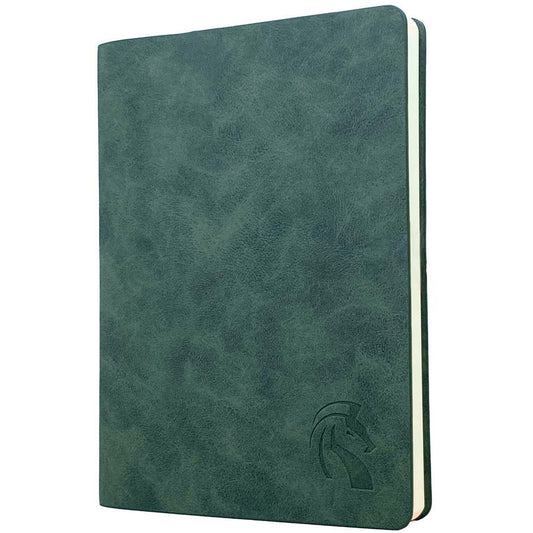
I do not recommend buying a dozen at once. Try one first. Write in it for a month. See if the feel of the paper and the binding changes your writing habits. For me, it did. I am on my second one now, and I plan to buy more.
The best tool is the one you actually use. The Best notebook for journaling by LeStallion is that tool for me. It might be for you too.